01Requirements
- Airframe validated for static load, modal behaviour and fatigue life — flight hardware fails in fatigue, not in static load
- Propeller life estimation backed by FEA — replacement intervals based on analysis, not guesswork
- Assembly line capable of scaling to 500+ units/month without proportional headcount growth
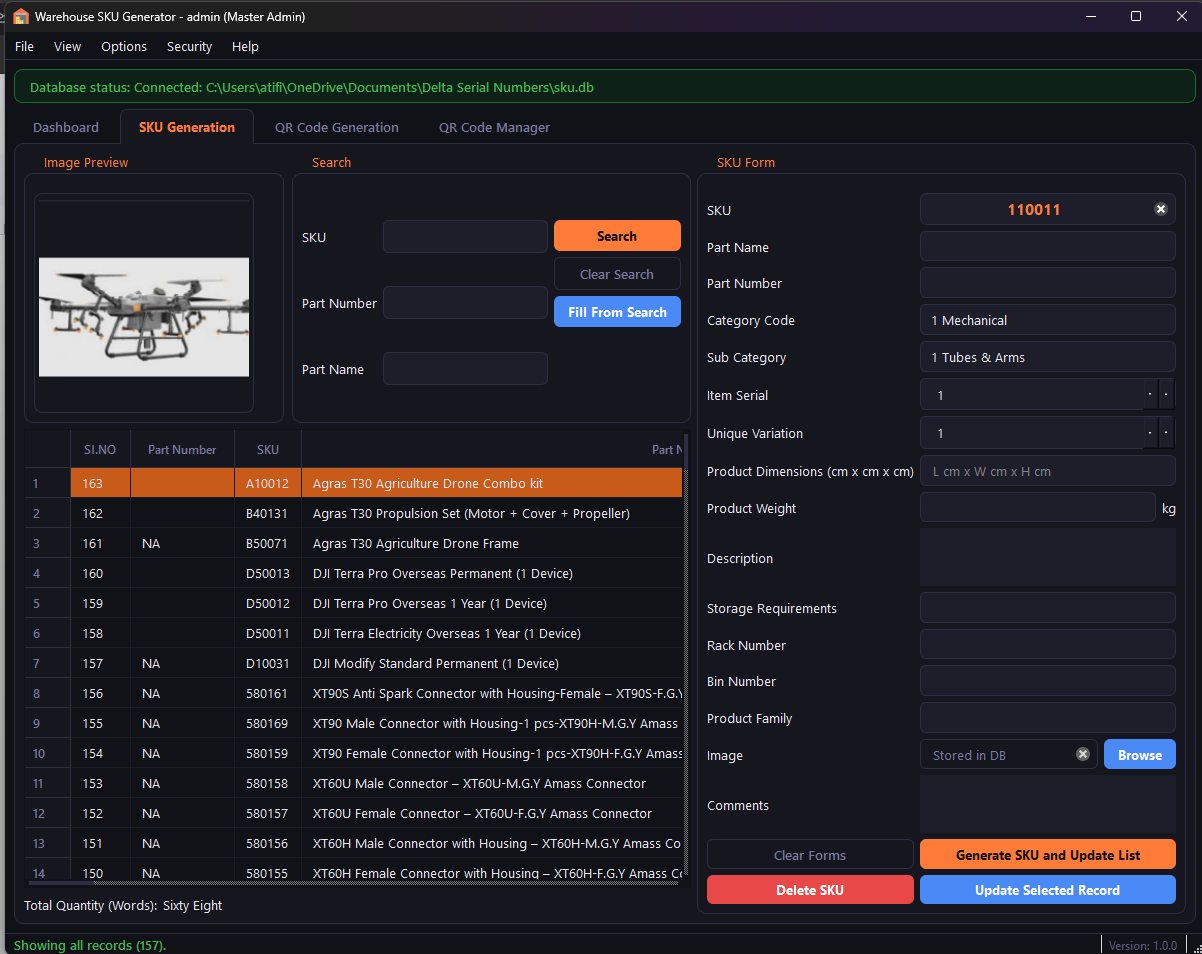
- Traceable part identification across mechanical, electrical and sensor modules for warehouse and WIP tracking
- Resilient supply chain — single-source part shortages were actively hurting production
02Key Decisions
Where does analysis effort go?
Fatigue and modal first. Static strength rarely limits a drone frame; vibration modes couple with motor RPM and fatigue accumulates at stress concentrations. Analysis results fed directly into thickness, ribbing and material selection decisions.
Build line in-house or transfer to EMS?
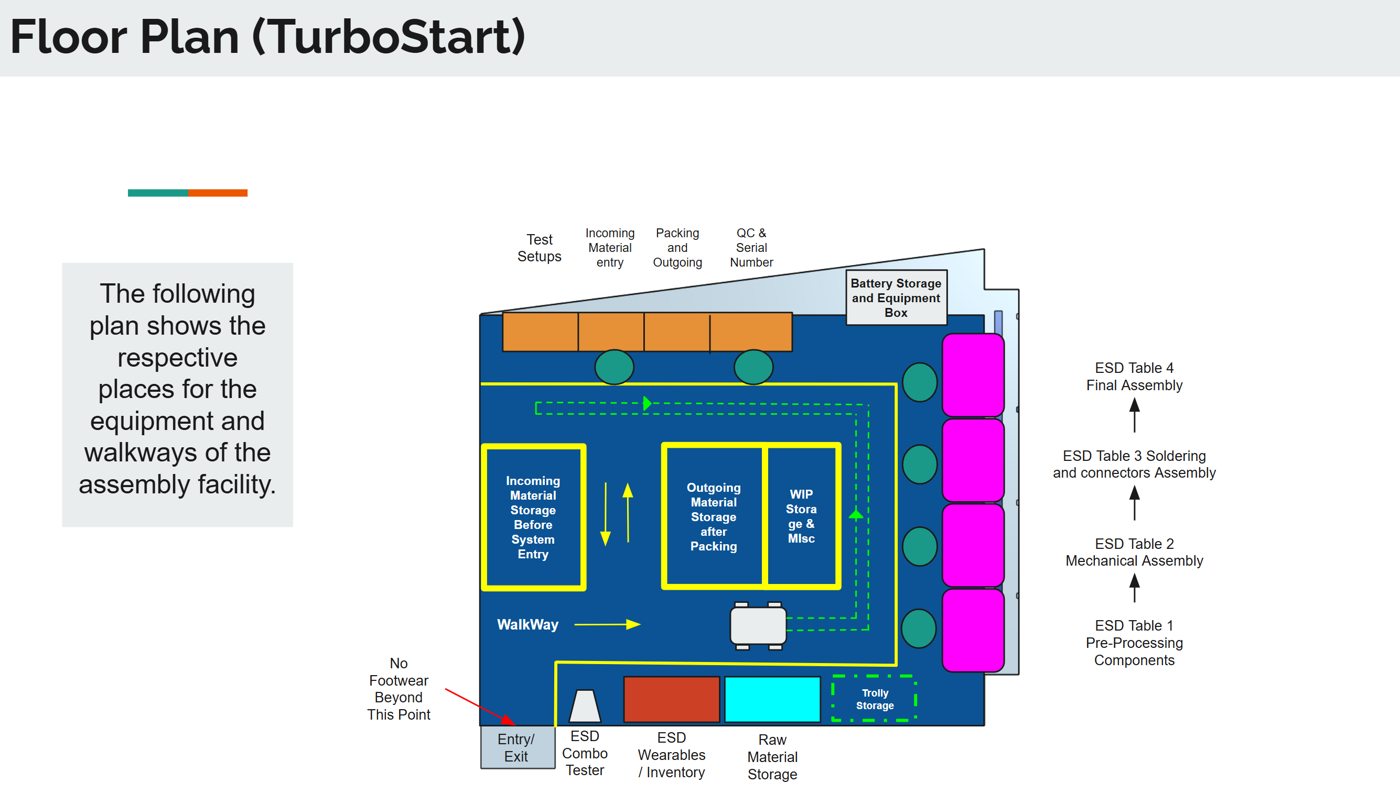
Both, staged. A modular in-house line designed around takt time for near-term volume, with NPI knowledge transfer to EMS contract manufacturers for SMT and box-build as volumes grow. Modularity means stations can be duplicated rather than redesigned when scaling.
How to fix part shortages permanently?
Go to the source. Scouted suppliers in Shenzhen directly to resolve shortages and establish long-term sourcing relationships, instead of relying on traders and hoping.
03Process
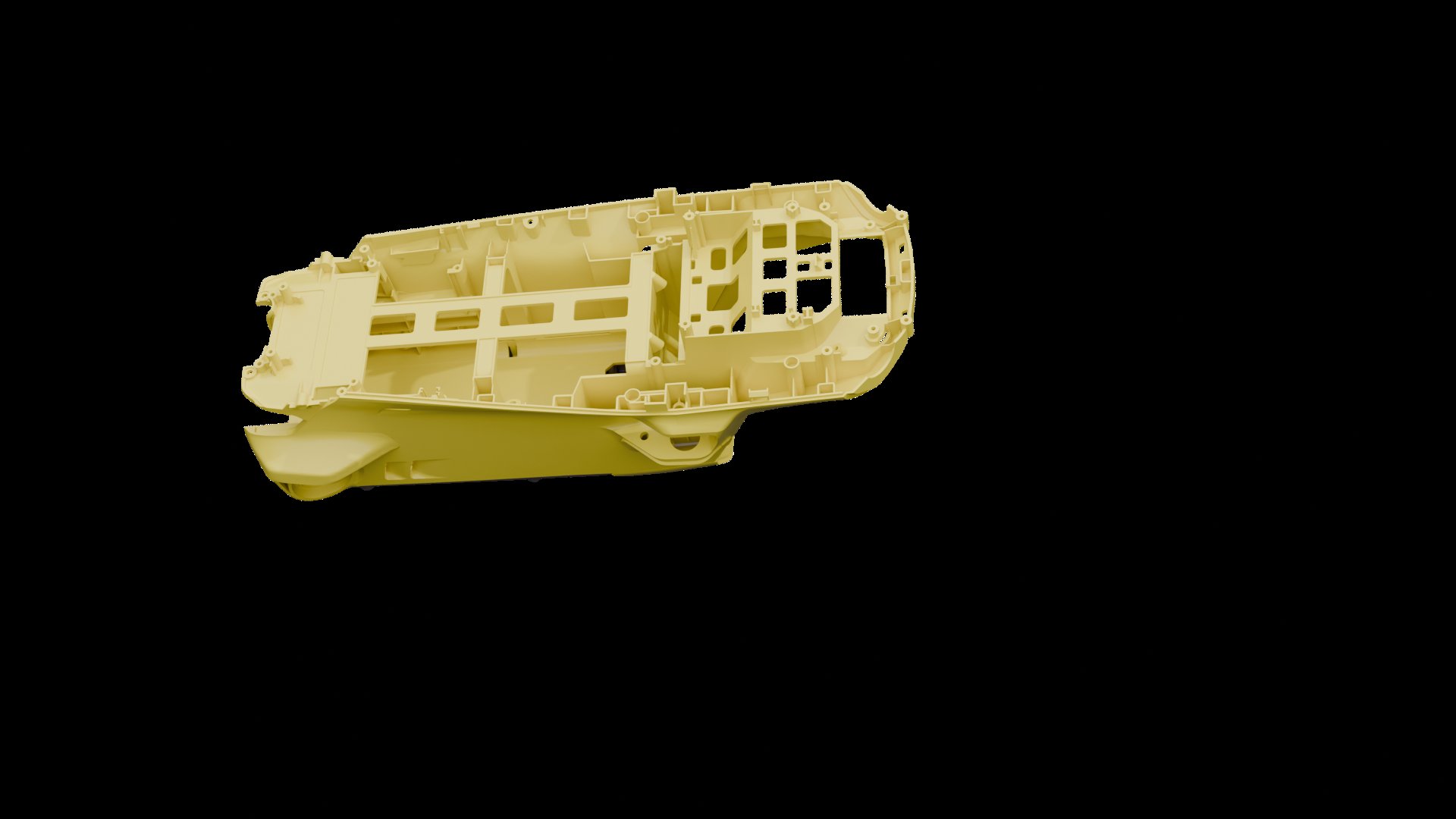
Structural work ran propeller life estimation and frame static/modal/fatigue analysis, iterating geometry with the design team. Production work mapped the assembly sequence into a modular line with optimised takt time, then built the SKU and part-coding logic that lets the warehouse and production floor track every module. Supplier development and EMS handover documentation closed the loop from design to scaled manufacture.
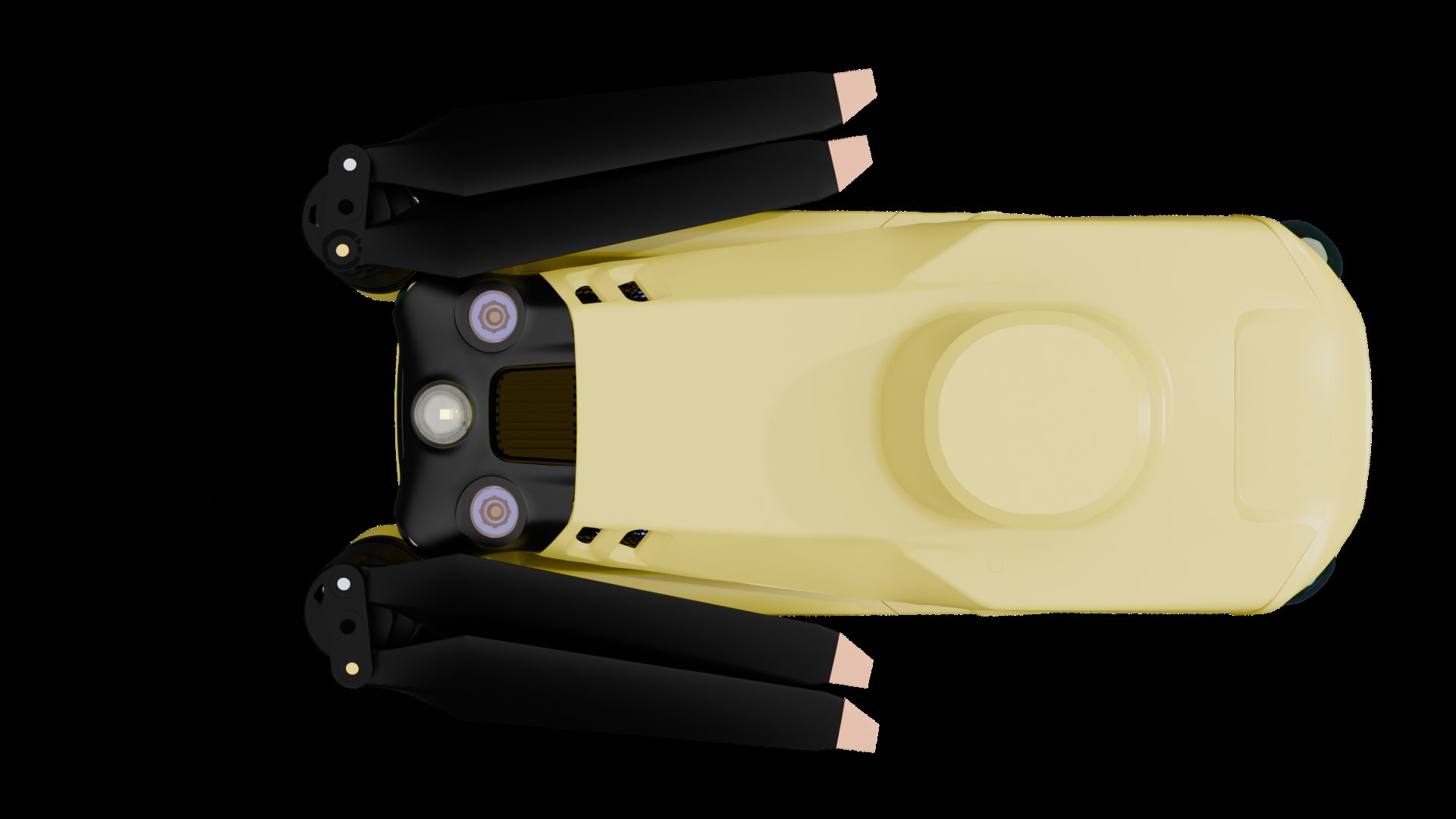
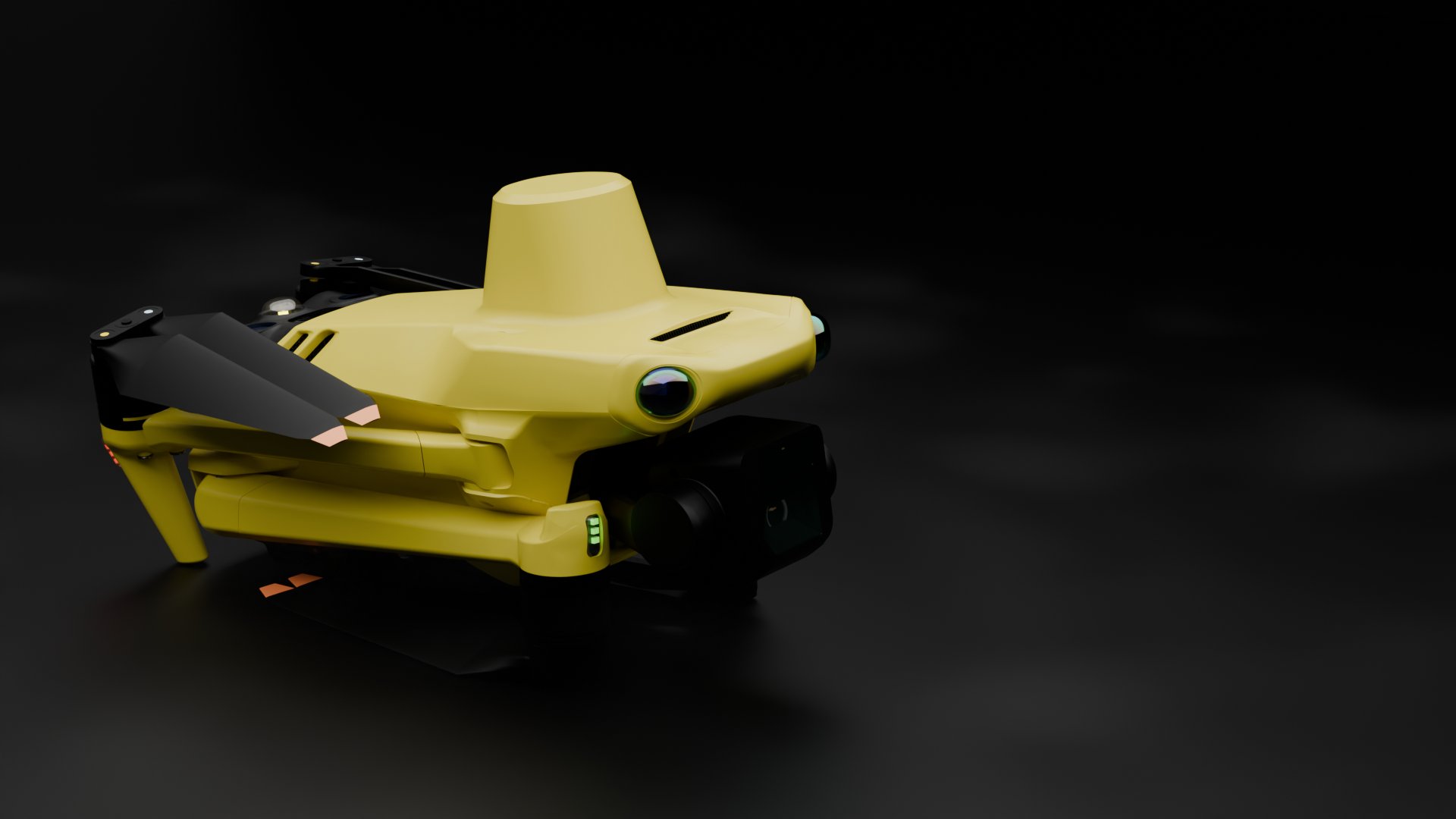
Note: renders above are personal Blender visualisation work, not the commercial product.
04Assembly System & Logistics
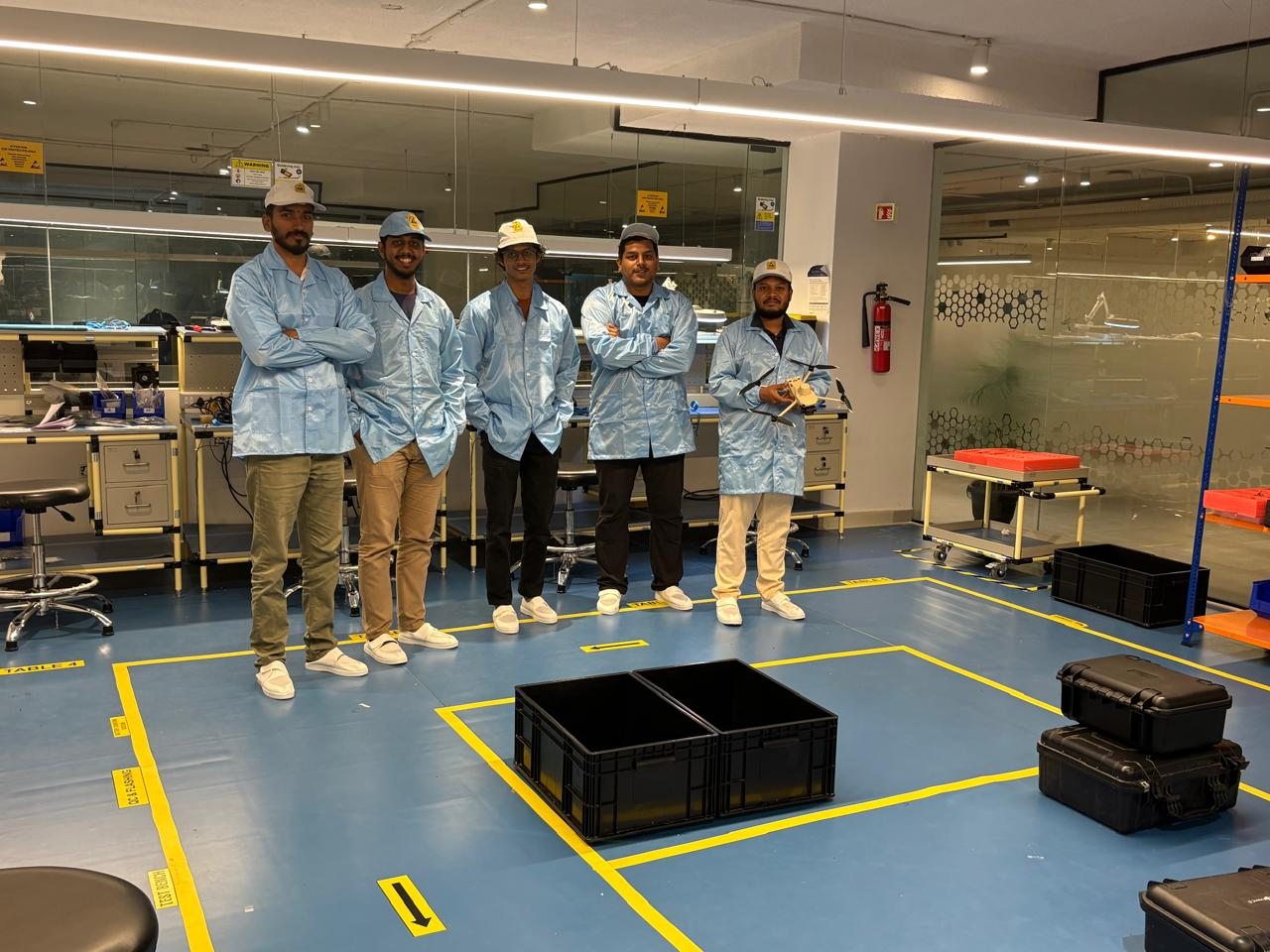
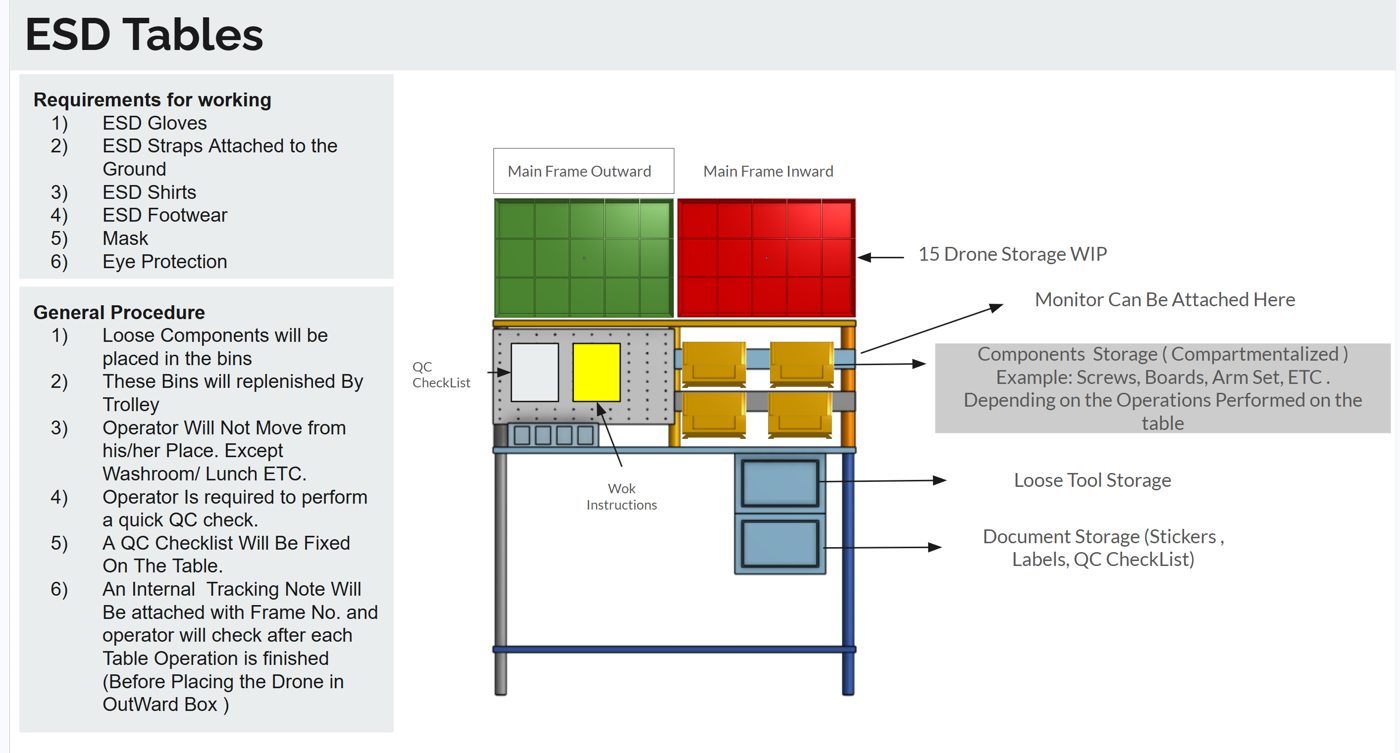
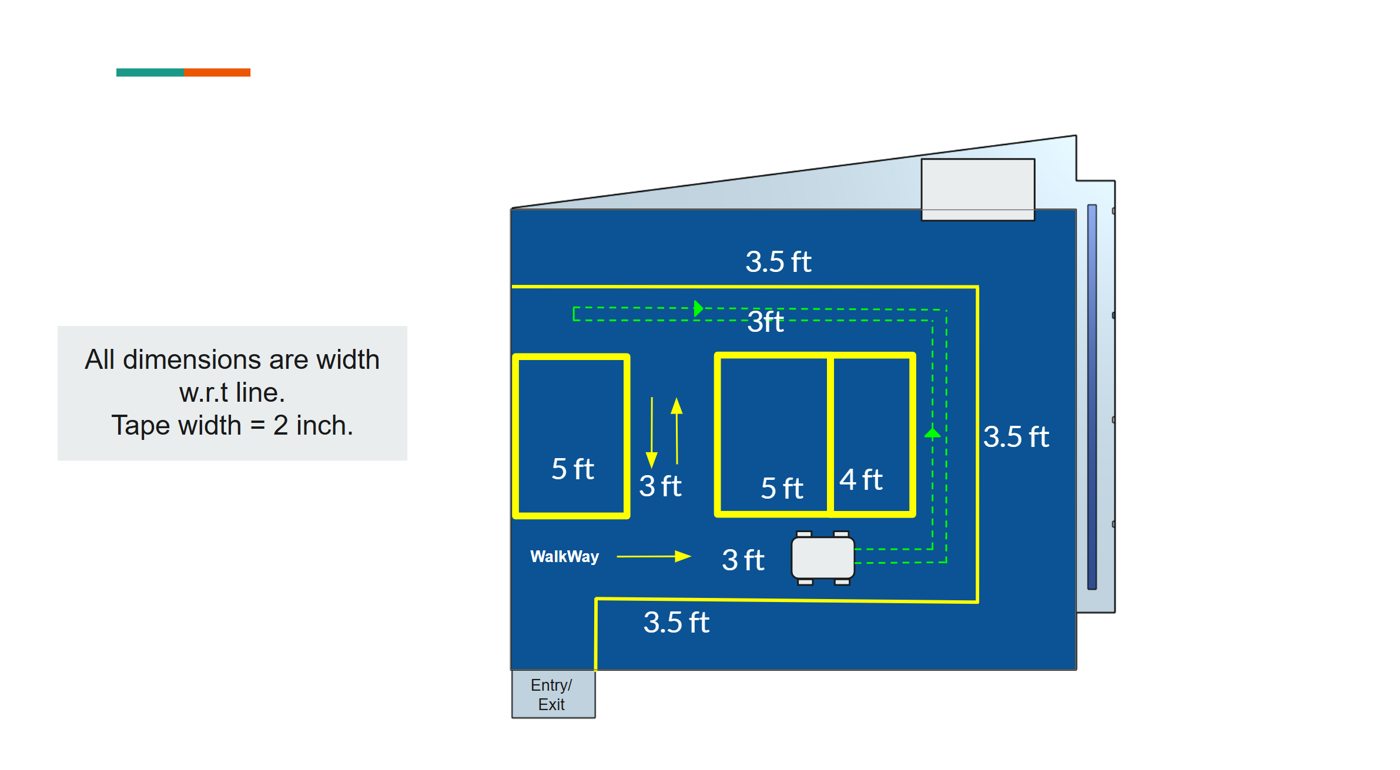
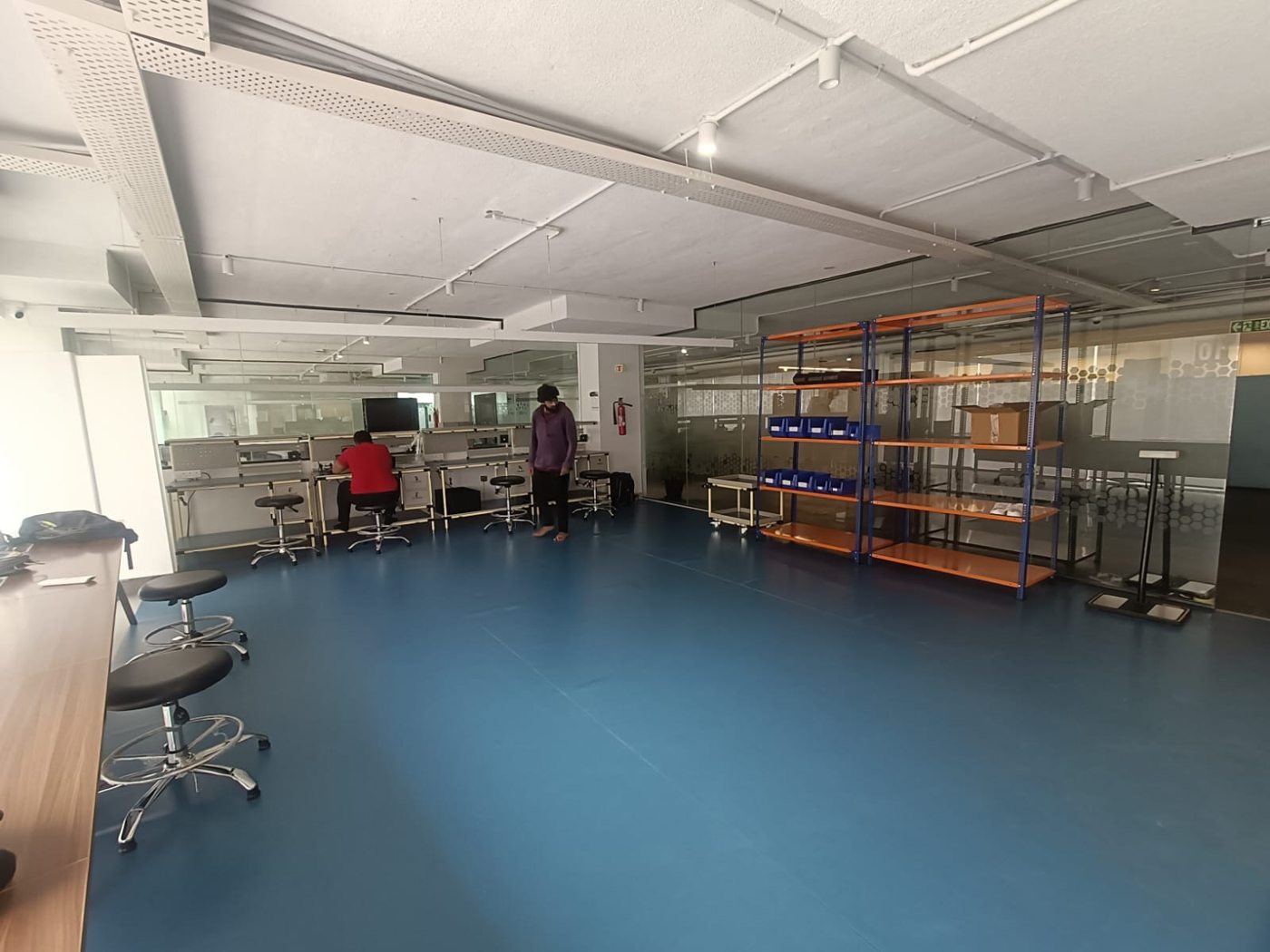
Beyond the airframe, the bulk of the work was the production system: a modular assembly area laid out for flow, ESD-safe workstations for the electronics and sensor build, and a part-coding / SKU system written in Qt C++ so the warehouse and floor can track every module by scan.
05Drone Battery — Bharat 100
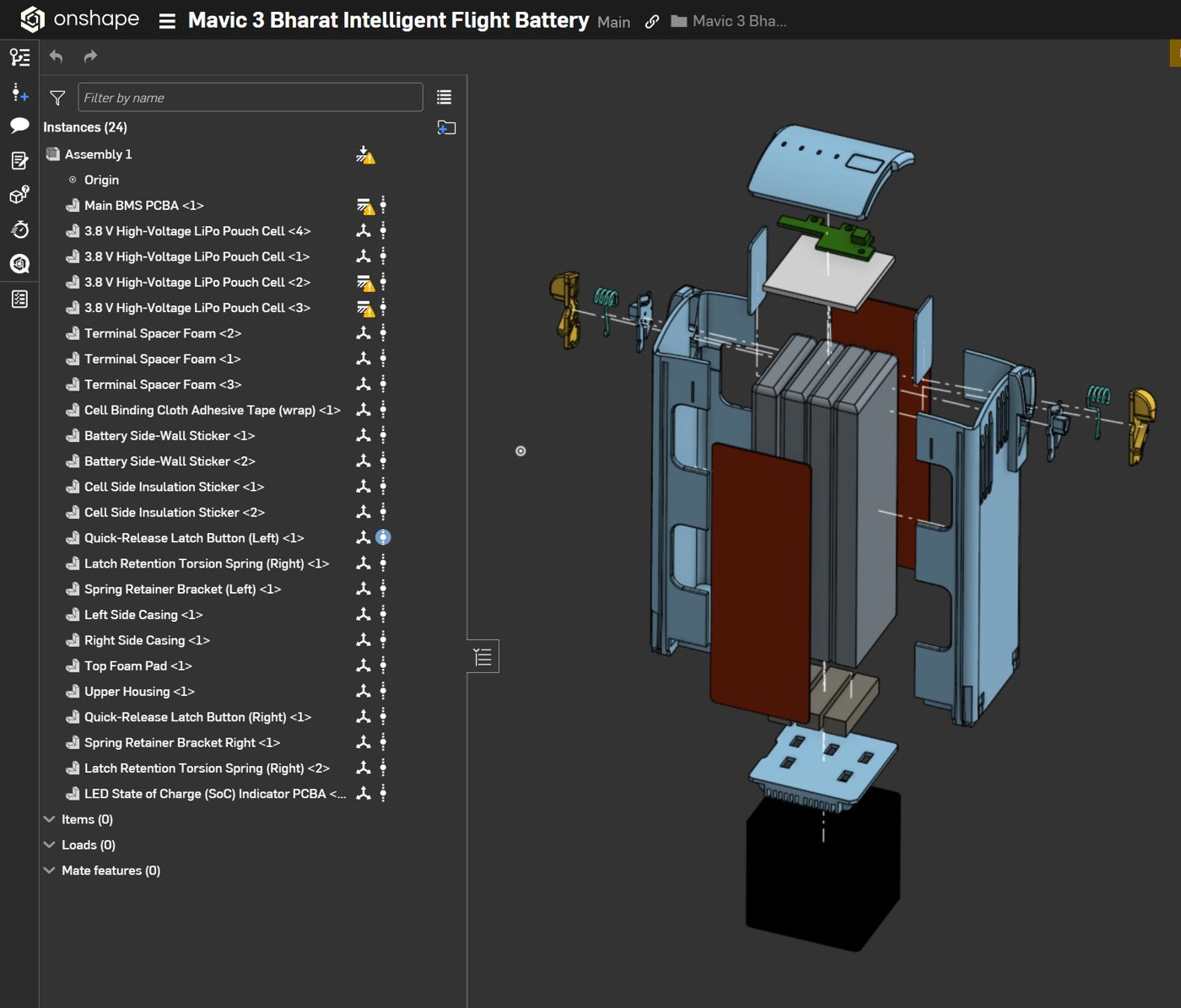
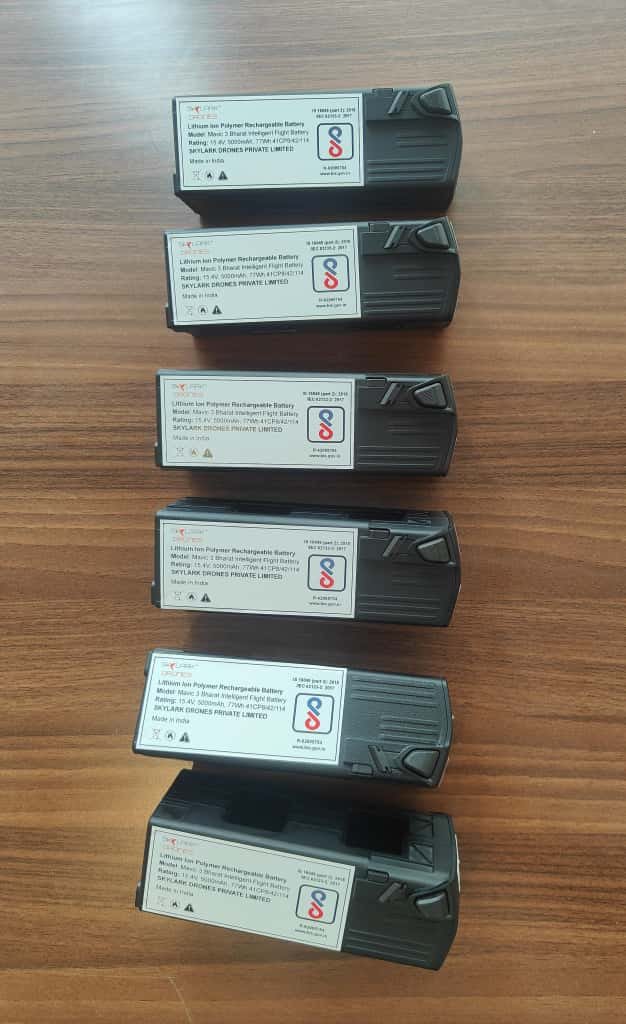
Mechanical design and packaging for the Bharat 100 drone battery — from the exploded CAD model through to the assembled pack.
06Challenges
Scaling without proportional cost
Hitting 500+ units/month with a line that's affordable today meant designing for duplication — modular stations that can be cloned as demand grows, rather than one monolithic line sized for a future that may shift.
Cross-domain part traceability
Drones mix mechanical parts, electronics and calibrated sensors — each with different revision behaviour. The SKU and part-coding system had to encode this cleanly enough for warehouse staff to use without engineering supervision.
07Outcome
Delivered (ongoing)
Production-ready modular line design targeting 500+ units/month · validated airframe and propeller life estimates · SKU system in use for warehouse and WIP tracking · Shenzhen sourcing relationships established · NPI transferred to EMS partners.